Food prices are increasing in Nigeria, insecurity may be to blame
After analysing data on food price and violent incidents from the past to the present a pattern emerges; prices are higher in the south than the north where many food commodities come from.
The last five years have seen a steady rise in the prices of most food commodities in Nigeria. While there are assumptions about what the causes are, I try to find out what food price data says about the price hike.
According to a report by the National Bureau of Statistics, Nigeria’s data collection agency, food inflation rose by 17.37 per cent in December 2021 compared to 19.56 per cent the same month the year before.
Globally, the trend of food price hike has been worse, according to the New York Times citing United Nations data.
In Nigeria, the northern part of the country is the food producing region. However, northern food producers depends on the southern market for sale. As insecurity make food production harder in the north, the south bears the brunt of food price hike.
Southern states make up most of the 10 top states where these commodities are most expensive. In fact, in the case of yam, which is produced predominantly in the north, the top 10 states where the price is highest are all in the south. In 2021, Cheta Nwanze, a lead partner with SBM Intelligence, a Nigerian geo-political research group told Aljazeera that Nigeria's food prices would remain elevated until the insecurity crisis, which has prevented farmers from returning to their land, is resolved.
Southern Nigeria is where price hike is mostly felt
There is no data about where poultry is mostly produced in Nigeria. But the assumption is that the poultry industry is fairly evenly dispersed across the country. Catfish and ofada(Yoruba word for local/unpolished/brown rice) are predominantly produced in the south.
About Nigeria's food data
I looked at food price index of Nigeria. The FPI is collated three times in a year – January, June and December - and the bureau of statistics has been consistent in the last few years in publishing this data.
Not all food items are published but most food items in the list are commodities common to every part of the country, which means these commodities are essential to survival.
I decided to take a sample of six food commodities common to most part of the country to see what the price movement have been like in the last five years. It is difficult to determine to what extent each of these food items are consumed in each state. They are chosen here for illustration, maybe because they are my favorite foods? But in actual fact, 3 of these 6 food commodities - Yam, beans and beans are produced predominantly in northern Nigeria that has seen more violent activities than other parts of the country.
For instance, yam is one of Nigeria’s most popular staple foods and of an estimated 52 million metric tons produced globally, Nigeria produces 37 million of it. It is one of the country's most popular foods and a source of income for farmers. So, when yam price goes up, there is trouble in the land.
The other commodities I chose also have similar significance to the Nigerian population. Beef, for instance, is a common source of protein in Nigeria.
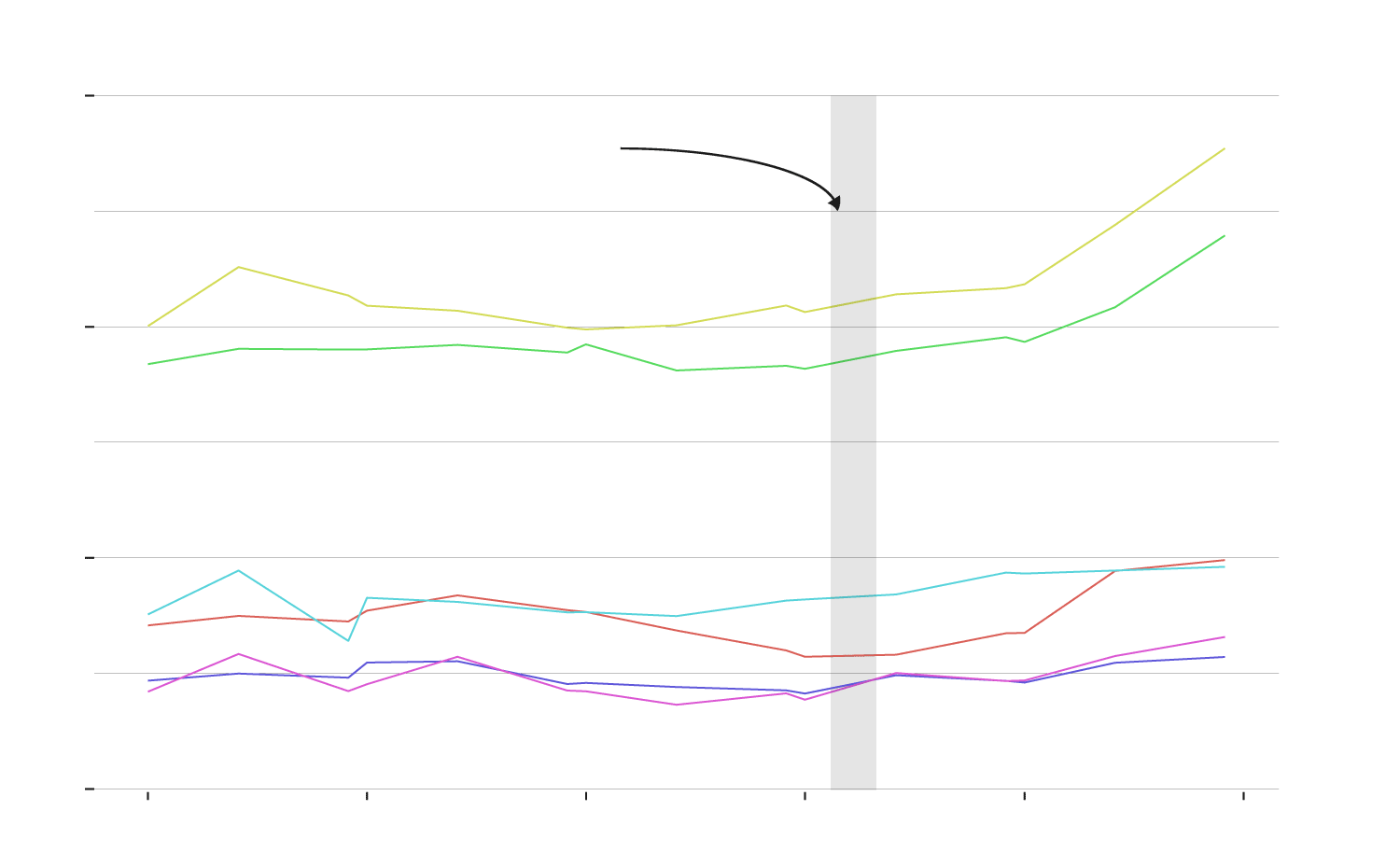
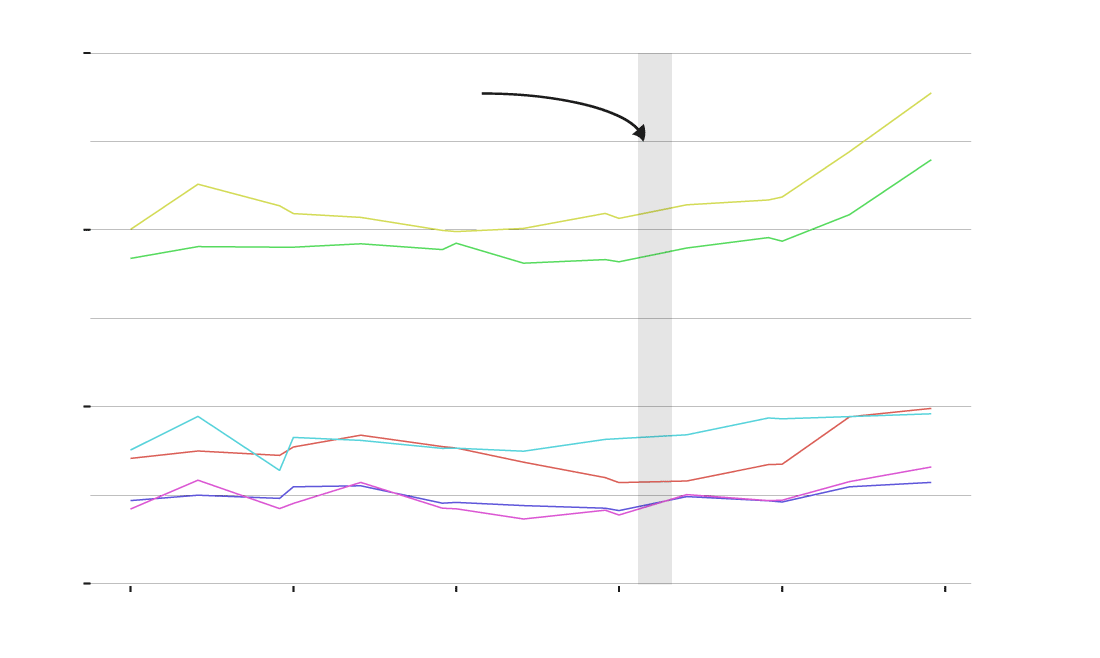
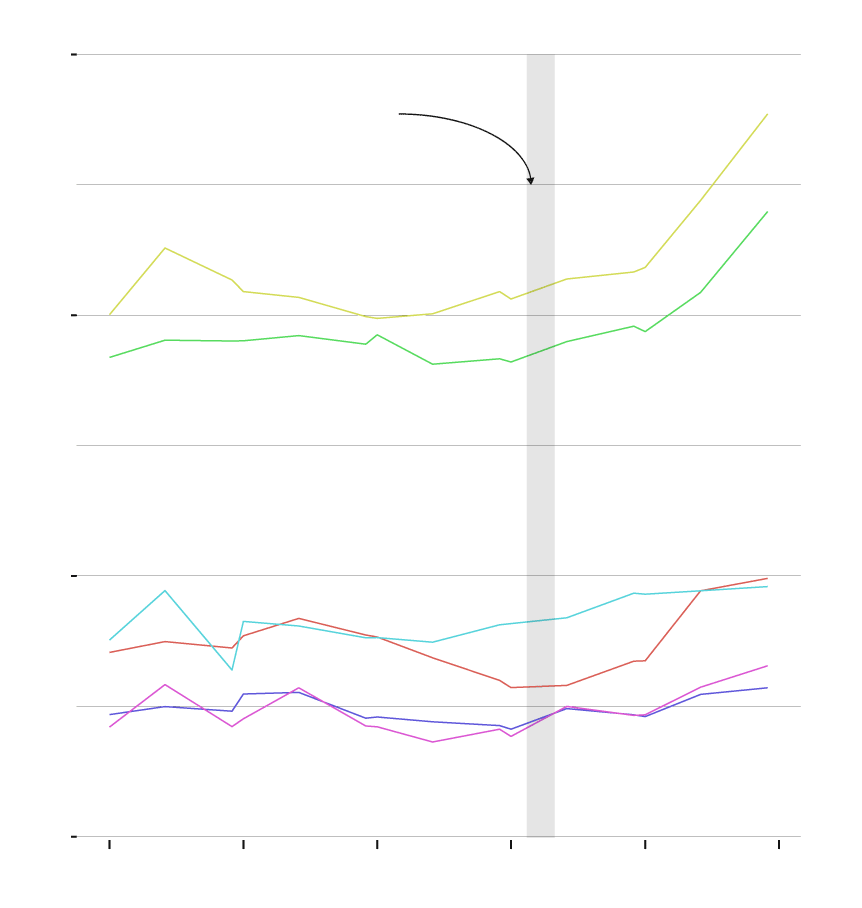
The data shows beef and chicken - two major sources of protein - are at their highest prices in the last 5 years.
The price of beef has gone up almost 50 per cent since 2017 while chicken has followed almost the same pattern. In the case of yam, the middle of the year (off-season) shows a spike in prices, with the exception of mid-2019. Generally, the price movement does not seem to have been as drastic as other items.
Naira
1500
Beef
March 2020, Nigeria
went into COVID lockdown
1250
Chicken(kg)
1000
750
Beans
500
Ofada
Yam
Plantain
250
0
2017
2018
2019
2020
2021
Jan 22
Naira
1500
March 2020, Nigeria
Beef
went into COVID lockdown
1250
Chicken(kg)
1000
750
Beans
500
Ofada
Yam
250
Plantain
0
2017
2018
2019
2020
2021
2022
Naira
1500
March 2020, Nigeria
Beef
went into COVID lockdown
1250
Chicken(kg)
1000
750
Beans
500
Ofada
Yam
Plantain
250
0
2017
2018
2019
2020
2021
2022
It is also not surprising that after a little dip in prices at the start of 2020, the prices begin to climb, perhaps due to the disruption to supply chain as COVID hit the country in March and lockdown went into effect.
Yam is produced predominantly by three states in northern Nigeria - Taraba, Benue and Niger. In the last 10 years, these states have been among the top 10 locations most by violent incidents like insurgency, bandit attacks and kidnappings in Nigeria.
Over the last 10 years, the three states have recorded over 5,000 fatalities in different crises.
There is no current data on which state produces the most beef or cattle in Nigeria. So, it is hard to determine the level of beef productivity of each state. Most beef cattles come from Nigeria’s north, a venture that has caused decades of violent clashes between cattle herders and farmers.
However, a 2010 report by the National Bureau of Statistics shows that Yobe, Gombe and Zamfara are the three top producers of beef cattle in the country. Both Zamfara and Yobe are in the top 10 states impacted by insecurity in the country.
Caveat: CFR depends mostly on newspaper reports to collate its weekly data. Density of incidents in some states in southern Nigeria may be due to high reporting rates because most of Nigeria's major newspapers are concentrated in the south.
Even though there is no data to show how adversely insecurity has affected the supply chain of food commodities from these affected states to the rest of the country, there have been studies which show it is a major factor in the country’s food insecurity. Noticeably, the states where the prices are higher are southern states. Nigeria is currently dealing with geopolitical crisis, with animosity between parts of the south and the north. Many food trucks from the northern part of Nigeria would normally be reluctant to go to the south-eastern part of the country. Scarcity brought about by this may account for the price increase in the south.
Even though there is no data to show how adversely insecurity has affected the supply chain of food commodities from these affected states to the rest of the country, there are studies which show it is a major factor in the country’s food insecurity.
Datasets and an analysis notebook can be found in this repository on Github.